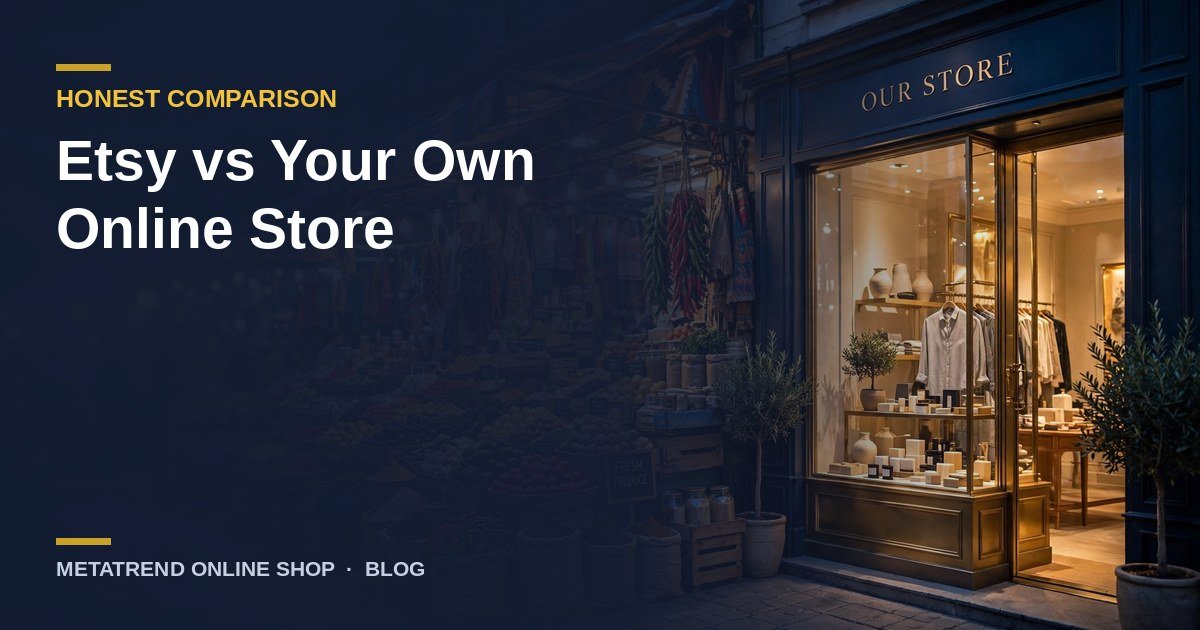
We sell on both. Here is what we have learned.
Full disclosure first: our own products — planners, spreadsheets and clipart — are listed on Etsy, and they are also listed here, in our own shop. So this is not an argument that one side is "better". It is the honest account of what each side gives you and what each side costs, so you can decide where your next product belongs — or, like us, use both for what each does best.
What a marketplace like Etsy gives you
An audience that is already shopping. Millions of buyers search Etsy every day with a card in hand. A new seller with no followers can make a first sale there purely because the search engine matched a buyer to a listing. That discovery power is real, and it is the main thing you are paying for. Etsy also handles the checkout trust problem: buyers who have never heard of you will still buy, because they trust the platform standing between you.
What it costs
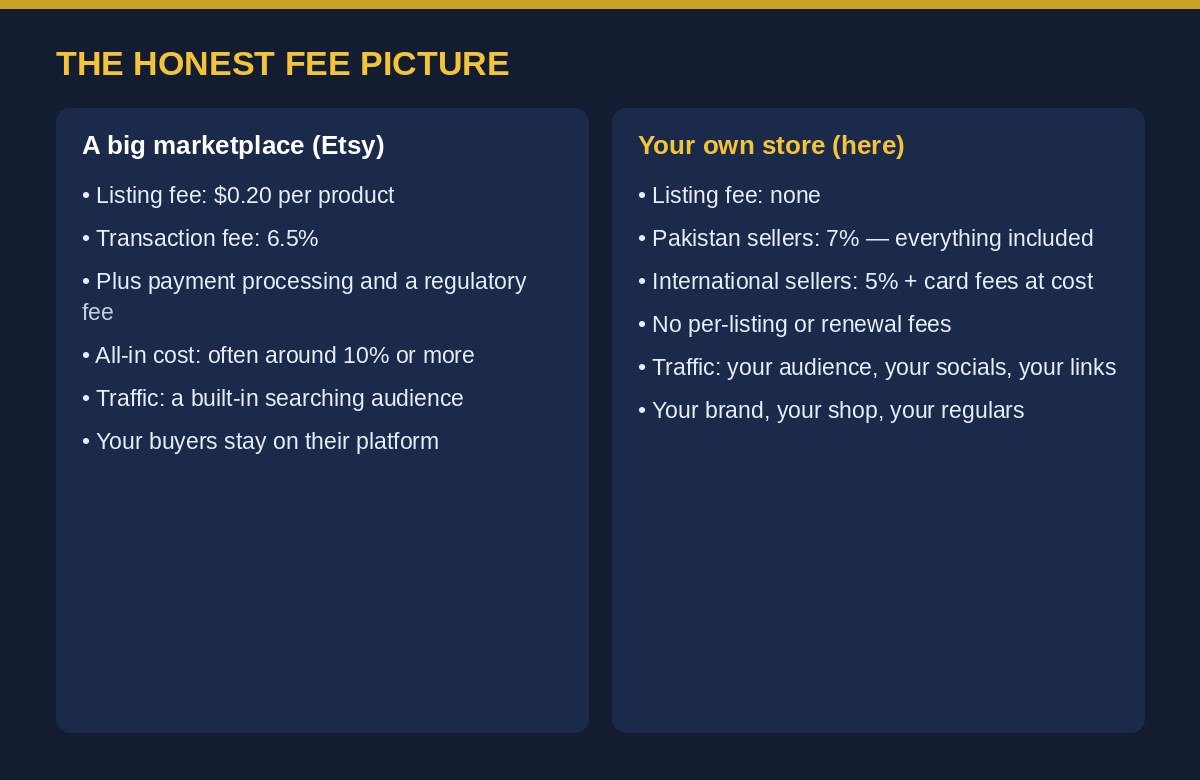
The fees arrive in layers. There is a $0.20 listing fee per product (renewed every four months), a 6.5% transaction fee on the sale price including delivery, then payment processing on top, and in many countries a small regulatory fee as well. Added together, sellers commonly give up around 10% or more of each sale — before optional advertising. None of these fees is hidden, exactly; they are simply spread across different pages, so many sellers never add them up. You should.
What your own store gives you
Margin and ownership. In this shop there is no listing fee and no renewal clock. Pakistan sellers pay one 7% fee with payment costs already inside it; international sellers pay 5% plus card fees at cost. Your product pages carry your brand, your prices show in both USD and PKR, and a buyer who loves your work finds your shop — not a search page where your competitors sit one thumb-scroll away from your listing. Your shop also cannot be closed by an automated flag on someone else's platform, which is a risk every marketplace seller quietly carries.
What it costs
Honesty cuts both ways: a new store has no audience of its own. Nobody wakes up searching your shop's name. The visitors are the ones you bring — from Pinterest, Instagram, Facebook, TikTok, your WhatsApp contacts. Sellers who already post content, or are willing to start, do well with their own store. Sellers who want the platform to find every buyer for them will feel the quiet — though they pay for that audience in fees whether they notice or not.

So which one should you choose?
If you have no audience at all and want to test whether strangers will pay for your product, a marketplace is the fastest classroom — expect to pay around a tenth of each sale for the lessons. If you already have followers, a community, or a skill people ask you about, your own store keeps more of every sale and builds an asset with your name on it. And the option most experienced sellers land on is the one we use: list on both. Let the marketplace introduce you to new buyers, and let your own store be the home those buyers return to — at fees that leave the margin with the person who did the work. You.